Winterizing garden furniture: what is actually necessary
There are two ways to get garden furniture through the winter. One is to carry it into the basement. The other is to leave it outside and protect it properly. The second path is the one most people eventually choose—because the basement is full, because the bench is too heavy, or because you want to sit outside on a sunny day in February.
Leaving it outside is perfectly fine. You just have to know what actually harms the material during winter.
It is not the cold that is the problem, but the moisture
Frost alone does little harm to wood, aluminum, and wickerwork. What causes damage is water that cannot drain away: rain that sits on a seat, snow that lies on a tabletop and melts slowly, and humidity that gets trapped under an airtight tarp and remains there for weeks.
This is why a cheap hardware store tarp made of thin plastic is worse than no cover at all. It keeps the rain out but traps the moisture in. Underneath, exactly the climate is created in which wood molds and metal corrodes.
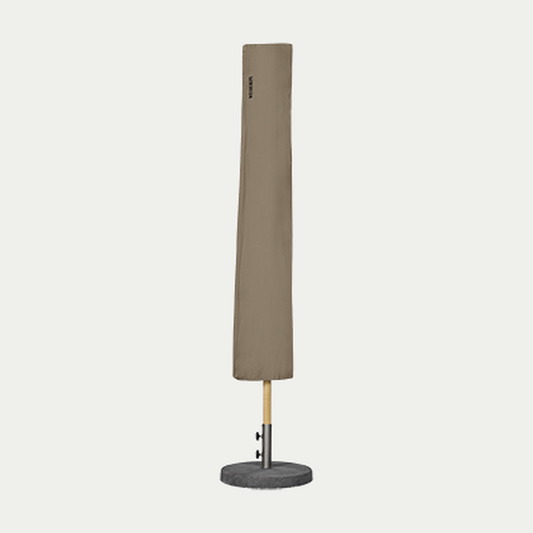
A good protective cover is water-repellent but breathable; it has an opening at the bottom and fits tightly enough so that the wind does not blow it off. For the Weishäupl collections, there are protective covers tailor-made for each series—you can find them directly on the furniture’s product page under accessories, so you do not have to guess which size fits.
Before covering: clean and dry
The most common mistake is to pull the cover over damp or dirty furniture. Pollen, leaves, and bird droppings trap moisture and work their way into the material over the winter. What is a stain in October becomes a discoloration by April.
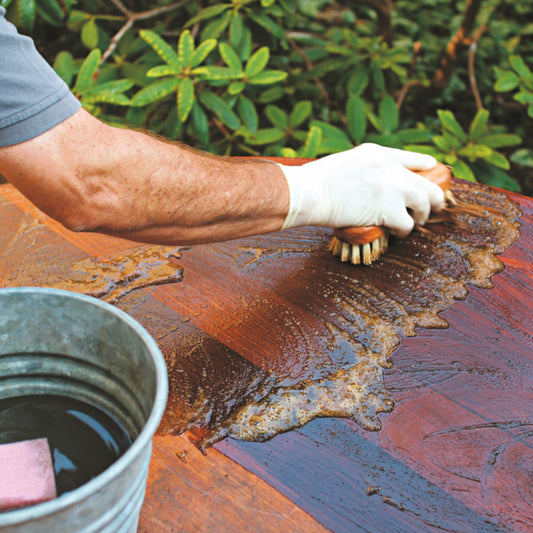
So: wash it off, wait for a sunny day, let it dry thoroughly, then cover it. For teak and other hardwoods, autumn is also a better time for maintenance than spring—use a wood cleaner to remove the gray layer, and if you want to maintain the warm tone, follow up with hard oil. If you prefer your teak silver-gray, leave out the oil. Both are correct; it is a matter of taste and not a question of durability.
Powder-coated frames need little: wiping them down is enough. Small chips should, however, be repaired before winter, otherwise moisture will work its way under the coating. We offer touch-up paint in the appropriate color for this.
Cushions come inside
Cushions and pads do not belong under the cover. They store moisture and release it to everything resting nearby. If there is no room in the house, a weatherproof bag on the terrace is the second-best solution—store them dry and, if possible, elevated rather than placed on the ground.
Parasols: closed, dry, vertical
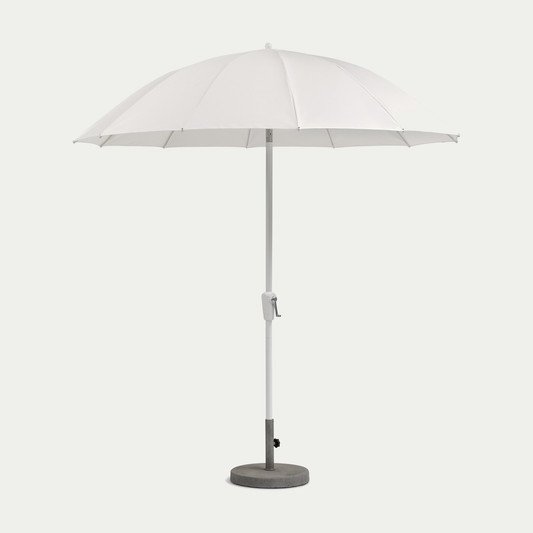
A parasol that is tied up while wet will have mildew stains on the fabric by spring. Those cannot be removed. Therefore, close the parasol on a dry day, let the fabric dry completely, then put the protective cover over it. It is best to keep the parasol in a vertical position so that no water collects in the fabric.
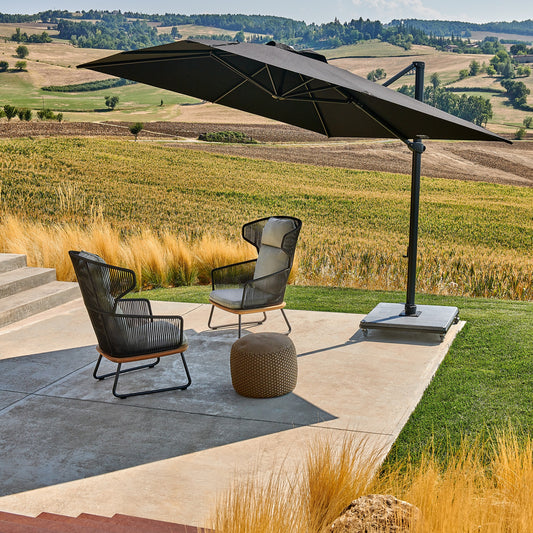
Large parasols and cantilever umbrellas are best removed from the pole entirely for the winter. In a storm, a closed umbrella is still a large surface, and the base is not designed for the gusts that occur in January.
What it ultimately means
A protective cover costs a fraction of what the piece of furniture cost. The difference between covered and uncovered does not show after the first winter, but after the fifth. Good garden furniture lasts twenty years or more—but only if it doesn't stand in the rain for five months every year.
If you are not sure which cover fits your furniture: write to us with your collection name, or send us a photo. We will let you know.