Winterizing garden furniture: choosing the right protective covers
Good garden furniture lasts for decades if you treat it correctly over the winter. Teak turns silver-grey, aluminium remains as it is, but upholstery and wickerwork suffer from dampness and frost. The simplest measure is a suitable protective cover. We have summarized what you should look for when choosing one and what you need to do beforehand right here.
Before covering: clean and let dry
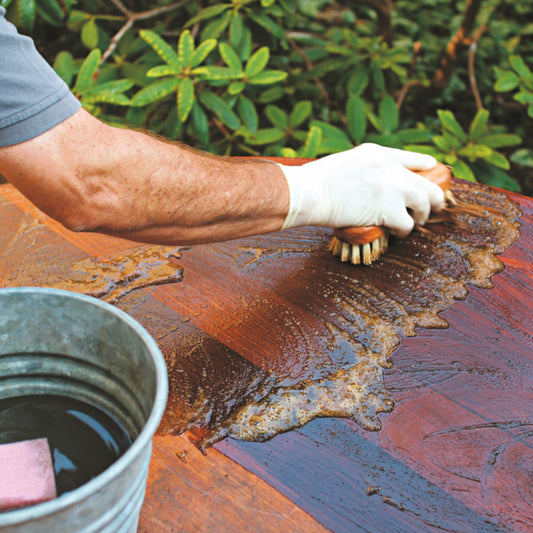
Never cover damp or dirty furniture. Moisture remains trapped under the cover, and a small stain can turn into mould by spring. Wipe down tables and chairs with lukewarm water and a little soap, let everything dry for one or two sunny days, and only then cover them. For teak, stainless steel, and textiles, you can find suitable cleaners in our Care and Protection collection. Upholstery and cushions do not belong under the cover; instead, keep them in a dry place inside the house or in a storage box.
The cover must fit the furniture
A universal cover from a hardware store is rarely good. It is either too large and flaps in the wind or too small and leaves edges exposed. At Weishäupl, there is therefore a dedicated protective cover for every furniture series that is precisely tailored to the model: for example, the Classic protective cover for chairs, armchairs, sun loungers, and tables up to 200 by 90 centimetres, the Slope protective cover for chairs, armchairs, loungers, and tables, or the Denia protective cover for lounge chairs, sofas, and daybeds. If you stack your furniture, you save space: covers are available for chairs and armchairs in stacks of two or four.
You can find all models in our Protective covers collection. If you are not sure which size belongs to your table, send us the dimensions or the model name, and we will find the right cover for you.
How to recognize a good protective cover
- Breathable fabric: The cover must repel water but allow moisture to escape from the inside out. This is the only way to keep things dry underneath.
- Fit: The cover should reach just above the ground but not rest on it. Otherwise, it will draw moisture up from the floor.
- Fastening: Drawstrings or buckles keep the cover in place even during autumn storms.
- Colour: Subtle tones like taupe or grey are barely noticeable in the garden and do not heat up as much in the spring sun.
Your parasol also needs protection
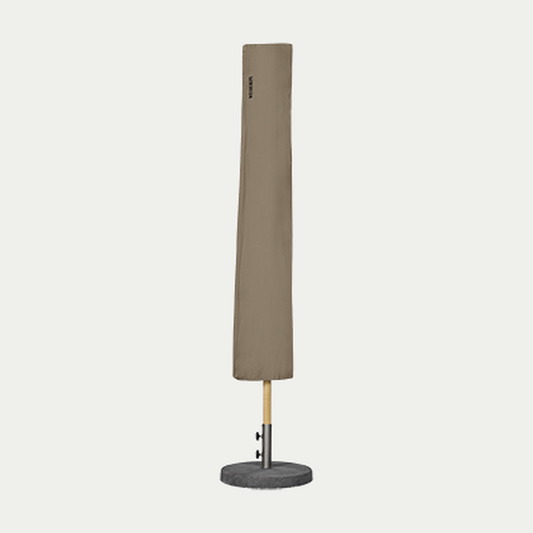
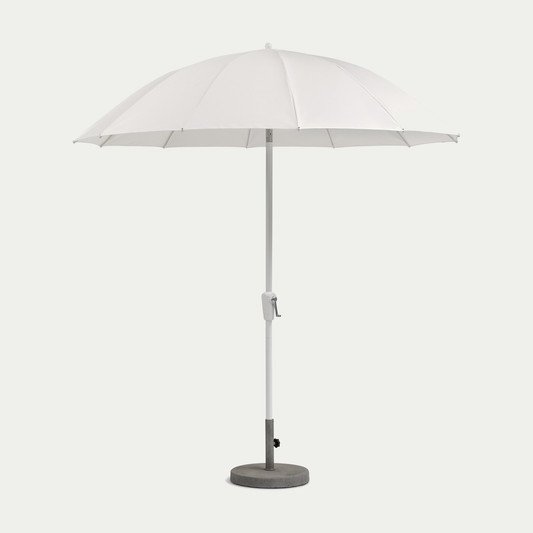
A parasol is best stored dry and closed under a cover for the winter. For Weishäupl parasols, there is the Basic and Custom protective cover in sizes for every model, available in either polyester or acrylic fabric matching the colour of your canopy. Large parasols from Bahama are provided with the Bahama protective cover, which includes a telescopic pole for very high parasols so that you can pull it over without a ladder. If the parasol stands in the garage over the winter, the cover is sufficient as dust protection; outdoors, it protects against rain, leaves, and bird droppings.
What can stay outside without a cover
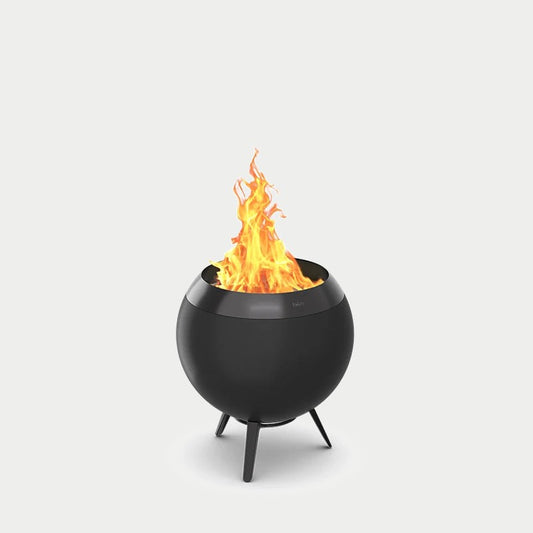
Furniture made of powder-coated aluminium and stainless steel does not mind rain and frost. If you like the silver-grey patina of teak, you can also leave wooden furniture standing without a cover, but it should be cleaned thoroughly in the spring. Everything with upholstery, wicker, textile covers, or wooden panels, however, should remain covered. Fire plates and grills from OFYR made of Corten steel can stay outside, but a cover will keep rainwater out of the fire bowl.
Unpacking again in the spring
Remove the covers on a dry day, let the furniture air out, and check the screws and glides. Wash the covers themselves with clear water and store them folded up; they will then be ready for use again next autumn.
If you do not know which cover fits your furniture or you need several sizes at once: write to us at info@huber-lebensgefuehl.de. We will advise you personally from Wasserburg am Inn and deliver the covers directly to your home.