The hotel terrace: furnish, roof, heat
The math in the restaurant business is straightforward: an outdoor seat that cannot be used when it rains is a seat that stays empty. With fifty seats and thirty rainy evenings a year, that adds up to a figure that makes any roofing solution look like a bargain.
Calculate first, plan second
Before choosing anything, we need three figures: the usable area, the average revenue per seat per evening, and the number of days the area is currently out of commission. This determines how much a solution should cost.
From experience: heating extends the evening by one to two hours and the season by six to eight weeks. Roofing turns fair-weather seats into year-round seats. Combined, both fundamentally change the profitability of a terrace.
Seating
Commercial use is subject to different rules than private use. Chairs must be stackable because they are cleared away every evening. They must be easy to carry with one hand, because the staff has something else in the other. And the upholstery must survive a glass of red wine.
What has proven effective: frames made of aluminum or teak, and covers made of outdoor fabric that can be wiped clean. What hasn't proven effective: anything with thick cushions that must be brought inside when it rains. After the third rain, no one does that anymore.
Roofing
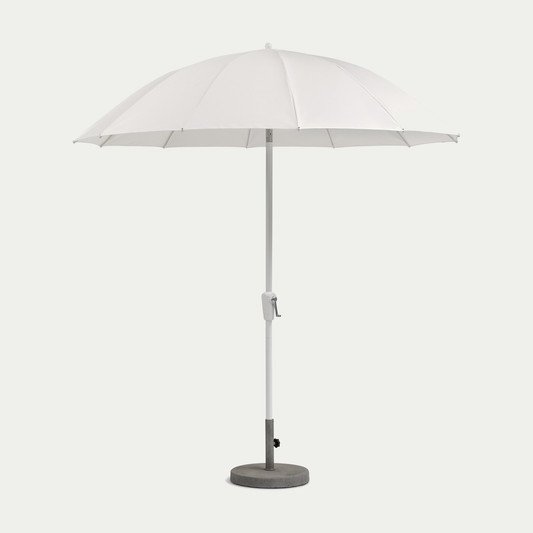
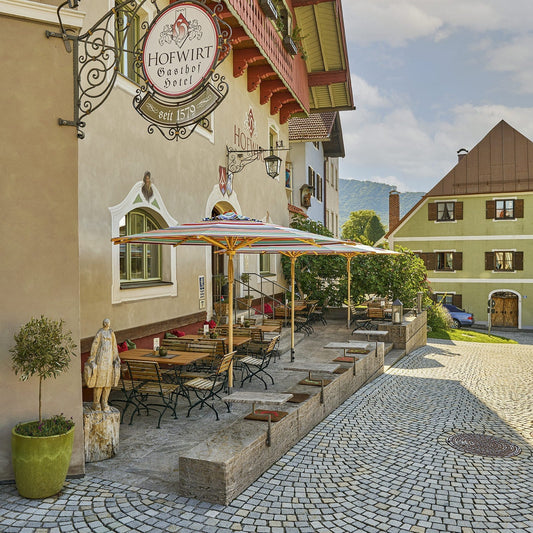
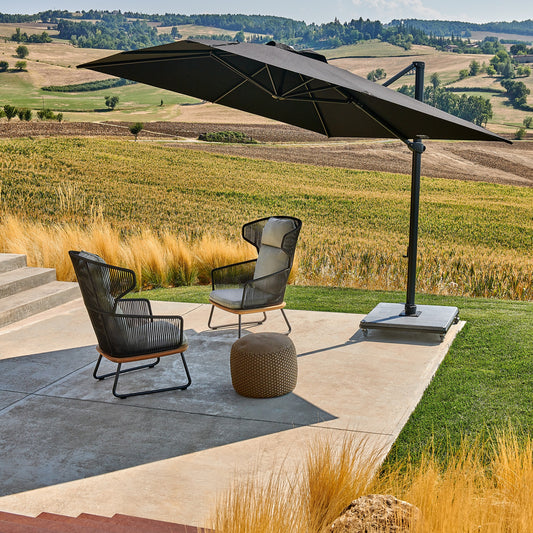
For smaller areas and varied use, large umbrellas are the right choice. They can be closed in the evening, do not require a foundation (which is important for listed buildings), and are relatively affordable. Anchoring is important: ground sockets instead of plates, otherwise your staff will trip over weights all season long.
For areas meant to stay set up daily, a louvred roof is the better answer. The slats can be tilted: open for the sun, closed against rain, partially open for shaded ventilation. With side screens, it becomes a room that you can still use for seating in October.
For both, the rule applies: wind sensors are not an accessory, they are your liability insurance.
Heating
Infrared instead of gas. Infrared heaters warm the people and not the air, meaning they work even when there is a breeze. No swapping gas cylinders, no preheating, no open flames.
Include controls in your planning. One transmitter for all units, so not every waiter needs their own remote control. And if an awning or roof control system is already in place, we will integrate the heaters into it.
Timeline
If you order in February, you'll be ready in April. If you call in May when the first warm evenings arrive, you'll be waiting until midsummer. Production is booked solid in the spring; that's the way it is every year.
How we work
We come by, take measurements, and calculate exactly how many seats you will gain. You will then receive a quote that already includes installation, foundations, and maintenance.
More for the hotel and restaurant industry