How to properly care for and winterize your awning fabric
The most common cause of a ruined awning fabric isn't a storm, but rather moisture that was rolled up. If you follow two rules, you'll get years more out of your awning.
Rule one: never retract and leave it wet
A brief shower is no problem – but the fabric must be extended again to dry as soon as possible. If it stays rolled up while wet, mildew stains, i.e., mold, will form in the fabric. These cannot be removed. So, extend your awning again after it rains, even if the sun is already gone.
Rule two: check the pitch
An awning needs a slope so that water can run off. If a water pocket forms in the middle, it pulls on the fabric and the arms. If you notice this, have the tilt angle adjusted – it's a matter of minutes.
Cleaning
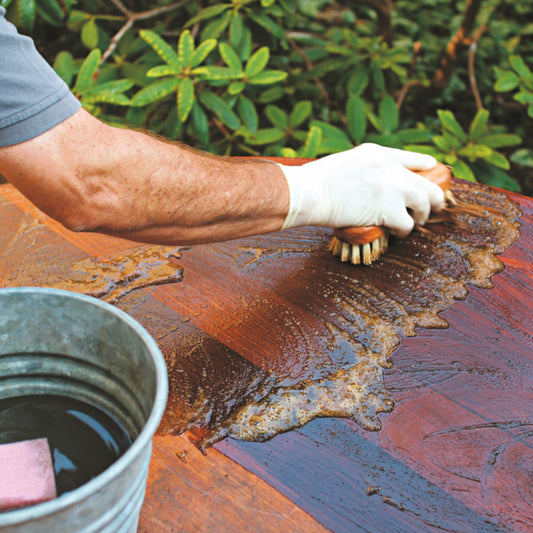
Brush off loose leaves and dust with a soft broom while the awning is extended. For stains, lukewarm water with a mild soap and a soft brush are sufficient; then rinse with clear water and let it dry completely. What you should not do: use high-pressure cleaners, harsh detergents, or the washing machine. All of these destroy the impregnation, which is exactly what keeps the water out.
Bird droppings and resin
Remove both immediately, not just in the fall. Bird droppings are acidic and attack the coating; resin hardens and then becomes very difficult to remove.
Winter storage
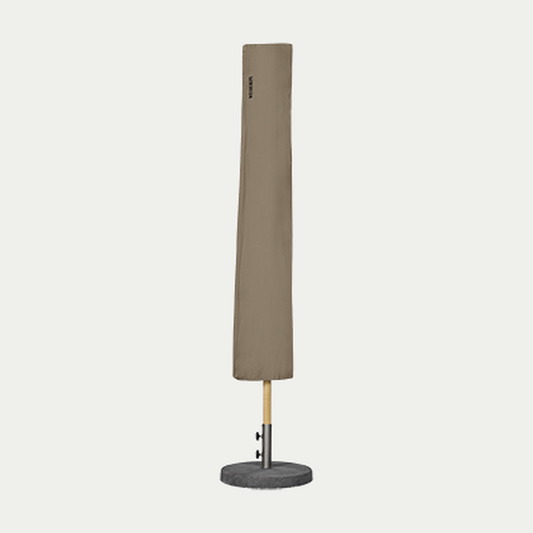
A cassette awning can stay outside; it is closed. An open folding-arm awning is better off with a protective cover over the winter – it is important that the cover remains open at the bottom so that air can circulate. A tightly sealed tarp becomes a greenhouse, and everything underneath sweats.
Check the mechanics once a year
Arms, joints, and mountings should be checked once a year, especially on older systems. We also do this for awnings that we didn't supply – as a master workshop for roller shutter and sun protection technology.
Suitable care products and covers: Care & Protection