Sunshade for the balcony: what really fits
On a patio, a parasol can be large. On a balcony, every half meter counts, and there is an additional factor that many underestimate: the area between the house wall and the railing creates turbulence that puts more strain on a parasol than open terrain does.
Measure first, then choose
Measure the depth from the railing to the wall and the usable width. A parasol should shade the seating area, not fill the entire balcony – you still need to be able to get past it.
Also consider the height. There is often less clearance under the balcony above than you might think, and a parasol must be able to open without hitting the top.
Where to put the base
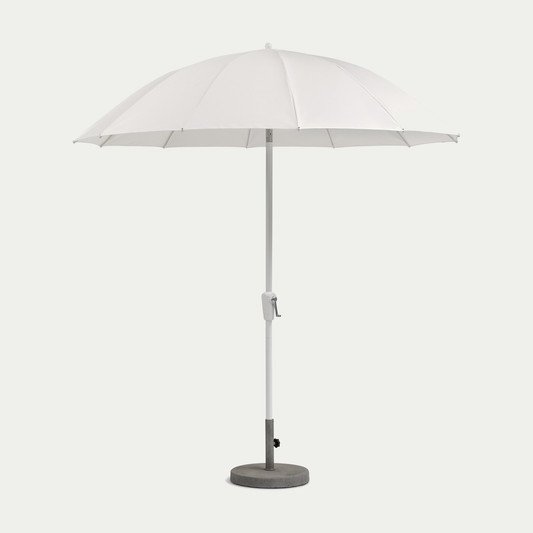
This is the real question on a balcony. A heavy base plate takes up space and load-bearing capacity. Semicircular plates that sit against the wall or railing are one solution. Another option is models that are bolted to the railing.
Important: Check in advance whether you are allowed to attach anything to the railing at all. This is often regulated in rented apartments and homeowners' associations.
Sun direction
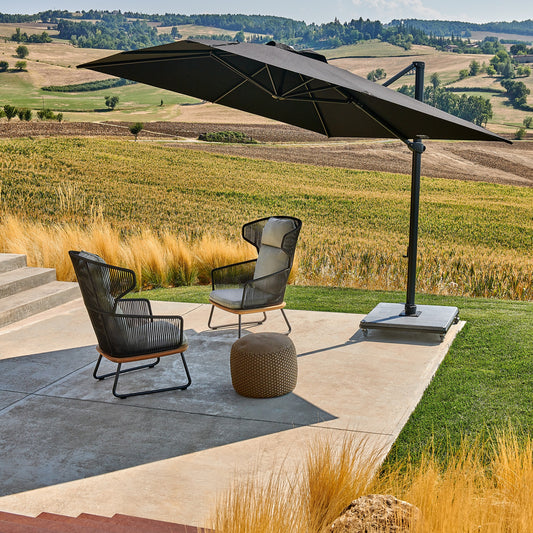
A west-facing balcony gets low sun from the side. A parasol that only stands vertically upward is of little help then. Tiltable models or a cantilever parasol that can be angled are more effective in the evening than a larger canopy.
Wind is the point where you shouldn't cut corners
A parasol that is blown off the balcony causes more than just property damage. Retract it when you leave the house, even if it is currently calm. And it is better to choose a model that can be closed in ten seconds than one where you first have to look for a crank.
If you like, we can take a look together
Send us a photo of the balcony and the measurements, and we will tell you what fits and what doesn't. +49 175 836 0774.
To the parasols · Parasol bases