Which parasol base for which parasol
The most common question we get on the phone isn't about the umbrella itself. It's about what goes underneath it. And rightly so: an umbrella that falls over is, at best, a broken umbrella.
Three deciding factors
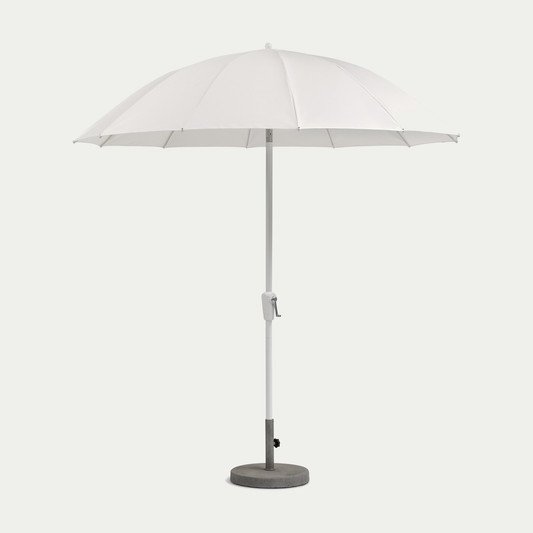
First, the umbrella surface. The larger the canopy, the more surface area the wind has to catch. When open, an umbrella is nothing more than a sail.
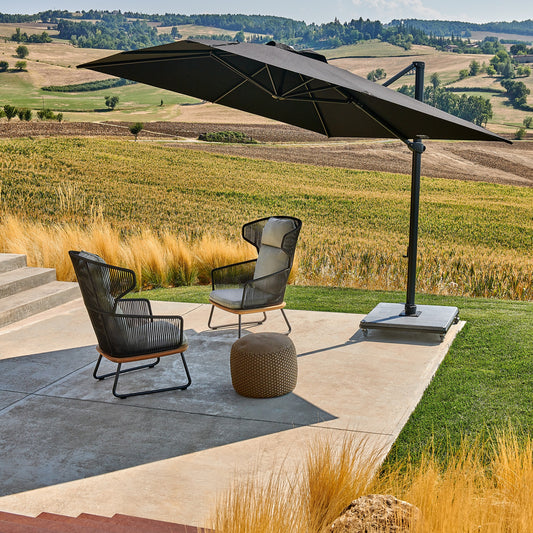
Second, the design. A center-pole umbrella stands with the mast directly on the base, so the weight acts against it directly. A cantilever or offset umbrella extends to the side—the lever arm is longer, which is why it requires significantly more weight than a center-pole umbrella of the same size.
Third, the location. A sheltered courtyard terrace is different from an open meadow on a hillside. If the wind blows through your area regularly, calculate generously.
Base plate or ground sleeve
A base plate is the flexible solution. It sits on the ground, can be moved with rollers, and put away for the winter. However, it requires weight, and weight is visible.
A ground sleeve is set in concrete. This is the cleanest option: the umbrella is rock-solid, there is nothing in the way, and when the umbrella is removed, a cover sits flush with the ground. The downside is obvious—you are committed to a specific spot, and once it's set in concrete, it's set in concrete.
We have bases made of concrete, steel, and granite, as well as stainless steel sleeves. The weight and suitable tube diameter are listed for every item.
The tube diameter
The stand must match the mast, not just the weight. Measure the diameter of the umbrella mast before you order. Some models include reducing sleeves, others do not.
If you are unsure
Tell us the size of the umbrella, the design, and how windy your location is. Then we will tell you what you need. It can be cleared up in five minutes over the phone: +49 175 836 0774.
To umbrella stands · Base plates · Ground sleeves · Parasols